 English
 中文简体
中文简体Industry News

As solar energy adoption expands, more users are turning to storage solutions powered by lithium battery technology. However, a common issue quickly emerges: why do some systems last over a decade while others show clear decline within just a few years? From a lithium battery factory perspective, the answer is closely tied to how battery lifespan is defined and managed—especially when it comes to cycle life.
Many buyers assume that a lithium battery labeled with a “10-year lifespan” will reliably operate for that entire period. In reality, there is a difference between calendar life and cycle life.
Cycle life refers to how many full charge and discharge cycles a lithium battery can complete before its capacity drops to a certain level, often around 80%. In solar storage applications, a system may cycle daily. This means a lithium battery rated at 2000 cycles could last roughly 5–6 years, while one rated at 6000 cycles could extend well beyond 10 years.
A professional lithium battery factory typically highlights cycle life in technical specifications, but users may overlook the testing conditions behind those numbers. This is where real-world performance begins to differ.
The internal chemistry of a lithium battery plays a key role in determining its cycle life. Lithium iron phosphate (LFP) batteries are widely used in solar systems due to their structural stability and longer cycle capability.
Compared to other chemistries, an LFP-based lithium battery often delivers between 4000 and 6000 cycles under standard conditions. Some higher-grade cells, developed by an experienced lithium battery factory, may exceed 8000 cycles depending on usage patterns.
This difference directly affects how long a solar storage system can remain functional without significant capacity loss.
Another important factor is depth of discharge (DoD). A lithium battery that is frequently discharged to near-empty levels will degrade faster than one operating within a partial range.
For example, using only 30% of a lithium battery's capacity per cycle can significantly extend its usable life. In contrast, deep discharge cycles place more stress on internal materials, reducing the number of cycles the battery can sustain.
From a lithium battery factory design perspective, system recommendations often include optimized charge and discharge windows to balance usability and longevity.
Temperature is one of the widely influential external factors for any lithium battery. Elevated temperatures accelerate chemical reactions inside the battery, which can bring about faster aging.
Research and field data show that for every 10°C increase in operating temperature, the degradation rate of a lithium battery may increase noticeably. This is why thermal management is a key part of system design.
A reliable lithium battery factory integrates cooling strategies such as airflow channels or heat dissipation structures to maintain stable operating conditions, especially in solar installations exposed to outdoor environments.
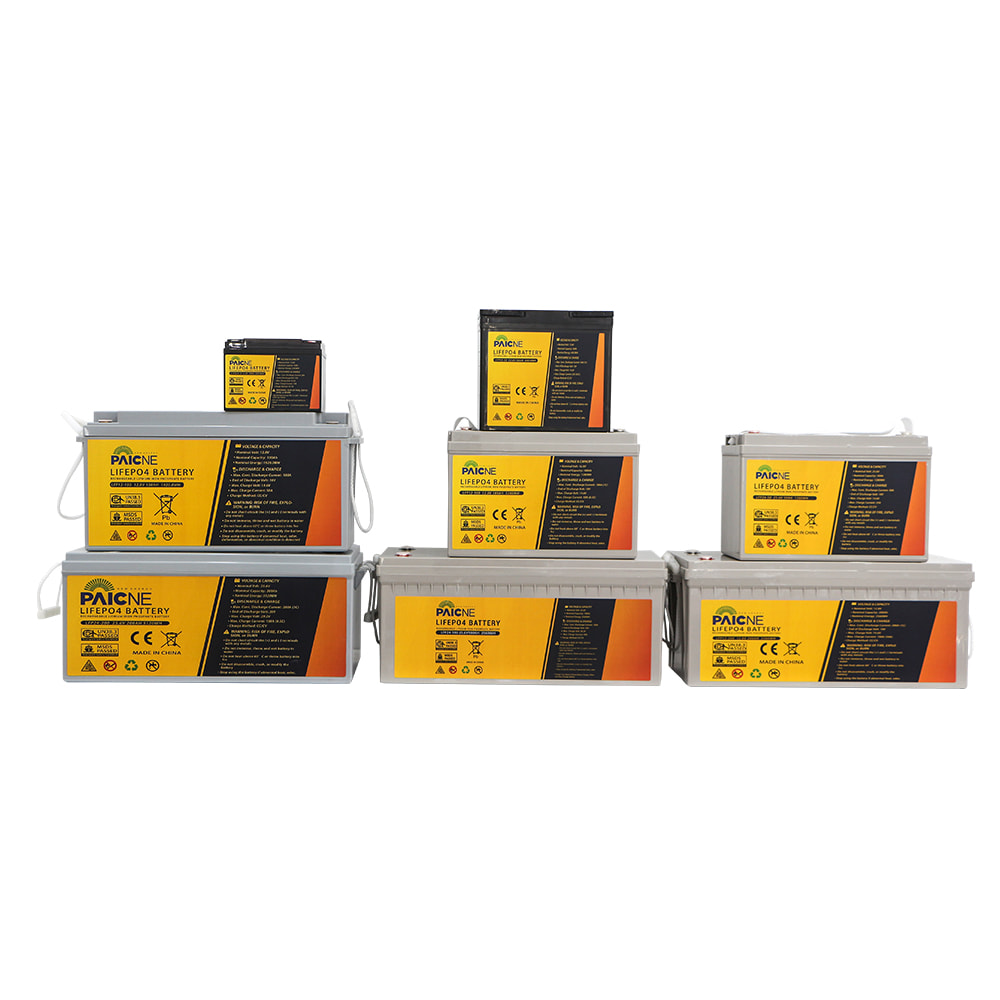
Not all cycle life ratings are measured under the same conditions. A lithium battery tested at shallow discharge and moderate temperatures will show higher cycle numbers than one tested under heavier loads.
When evaluating products, buyers should look for detailed test parameters, including:
A qualified lithium battery factory typically provides certification and testing reports aligned with international standards. These may include ISO9001 quality systems and certifications such as IEC, CE, ROHS, MSDS, and UN38.3.
Such documentation helps verify that the lithium battery performance claims are based on consistent and recognized benchmarks.
Beyond the battery itself, the overall system configuration also plays a role. Charge controllers, inverters, and battery management systems all affect how a lithium battery operates over time.
An integrated approach from a lithium battery factory supports that each component works within safe limits. Proper voltage control, balanced charging, and temperature monitoring all contribute to extending the usable life of the battery.
The lifespan differences seen in solar storage systems are not random. They stem from measurable factors such as cycle life, material choice, depth of discharge, and operating temperature.
A professional lithium battery factory considers all these elements together. For buyers, understanding how a lithium battery is tested and used provides a clearer basis for evaluating long-term value and performance in real-world applications.
Get to know quickly
We are a professional lithium iron phosphate battery, solar energy storage system, industrial and commercial energy storage system manufacturer.
 +86-133 3592 3377
 +86-4008833583
 Email: [email protected]

Copyright © Zhejiang Paichen Energy Storage Group Co., Ltd All Rights Reserved.

Battery Energy System Manufacturer