 English
 中文简体
中文简体Industry News

As demand for electric tools continues to grow, the role of a reliable lithium battery for power tools becomes more critical in daily operations. From drills to grinders, performance consistency often depends less on the tool itself and more on the battery behind it. Yet during procurement, many buyers still focus mainly on price and nominal specifications, overlooking several factors that directly affect long-term usage.
From the perspective of a lithium battery for power tools factory, understanding these overlooked points can help buyers avoid unstable performance and premature battery failure.
One of the widely misunderstood aspects of a lithium battery for power tools is capacity. Suppliers often list rated capacity, but actual usable energy can vary depending on working conditions.
In real applications, a lithium battery for power tools may deliver less than its labeled capacity due to discharge rate, temperature, and cutoff voltage. High-drain tools especially require stable output, and if the battery cannot maintain voltage under load, the effective capacity drops.
Another key factor is cell consistency. Within a battery pack, the weakest cell determines the overall performance. A lithium battery for power tools factory that controls cell grading and matching can reduce this variation. Without proper sorting, even a high-rated lithium battery for power tools may show uneven discharge and reduced runtime.
For procurement, asking for cell matching records and batch consistency data provides a clearer picture of real capacity performance.
The Battery Management System (BMS) plays a central role in how a lithium battery for power tools operates under load. Some manufacturers rely on third-party BMS solutions, while others develop integrated systems.
A mismatch between BMS and battery cells can bring about several issues. In a lithium battery for power tools, protection thresholds may not align with actual cell behavior. This can result in delayed cutoff during overcharge or insufficient protection during high current discharge.
An experienced lithium battery for power tools factory usually helps maintain that the BMS design, pack assembly, and electrical configuration are developed together. This allows better calibration of voltage limits, balancing current, and temperature monitoring.
For end users, this translates into smoother operation and fewer interruptions, especially when tools are used continuously or under heavy loads.
Cycle life is often highlighted in product specifications, but the test conditions behind the numbers are not always discussed. A lithium battery for power tools rated for thousands of cycles may achieve that figure under controlled laboratory settings.
In practice, tools often operate under high discharge rates and varying temperatures. A lithium battery for power tools used in construction or industrial environments may experience faster degradation than expected.
For this reason, a reliable lithium battery for power tools factory provides cycle life data under different scenarios, including high current discharge and elevated temperatures. This helps buyers better estimate real-world lifespan.
Understanding how a lithium battery for power tools performs beyond standard test conditions is essential for applications where uptime matters.
Many modern lithium battery solutions for power tools are based on lithium iron phosphate (LFP) or similar chemistries. These materials offer stable thermal behavior and longer cycle performance compared to some alternatives.
However, material selection is only part of the equation. The way materials are processed, assembled, and tested also influences the final outcome. A lithium battery for power tools factory with in-house testing capabilities can better control quality across production stages.
This helps maintain that each lithium battery for power tools meets consistent performance standards, reducing the risk of unexpected failures during operation.
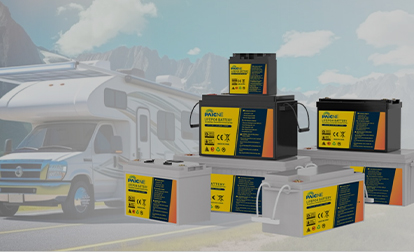
Production capability is another factor often overlooked. A well-established lithium battery for power tools factory typically operates with standardized processes, testing equipment, and quality certifications.
Facilities with their own laboratories can validate performance data, including capacity distribution and cycle testing. This level of transparency helps buyers verify whether a lithium battery for power tools meets its claimed specifications.
On the other hand, suppliers without testing infrastructure may rely on generic data, making it harder to assess real product quality.
Choosing the right lithium battery for power tools involves more than comparing price and capacity. Factors such as usable capacity, BMS integration, cycle life conditions, and manufacturing capability all influence long-term performance.
A professional lithium battery for power tools factory approaches these elements as part of a complete system rather than isolated features. For buyers, asking detailed questions about testing methods and production processes can help identify a lithium battery for power tools that delivers stable output and consistent reliability across different working environments.
Get to know quickly
We are a professional lithium iron phosphate battery, solar energy storage system, industrial and commercial energy storage system manufacturer.
 +86-133 3592 3377
 +86-4008833583
 Email: [email protected]

Copyright © Zhejiang Paichen Energy Storage Group Co., Ltd All Rights Reserved.

Battery Energy System Manufacturer