 English
 中文简体
中文简体Industry News
Home / News / Industry News / What Makes 48V Lithium Batteries Different from Other Voltage Systems?

In many battery-related products, voltage is one of the sooner things people look at, even before capacity. Among the common options, 48V sits in a range that shows up often in electric mobility and storage systems. A 48 Volt Lithium Battery is usually selected when the system needs steady output without moving into higher-voltage complexity.
A 48 Volt Lithium Battery Factory generally works around this middle voltage level because it matches a wide group of end uses, from small vehicles to backup energy systems.
Across different applications, lithium batteries are not limited to one voltage. Some common ones appear repeatedly in daily products:
In this range, the 48 Volt Lithium Battery tends to sit in the middle. It is not the smallest option, and not the high-power end either.
In practice, 48V systems are often chosen because they avoid the limitations of low-voltage setups. With 12V or 24V systems, current can become high when power demand increases, which affects wiring and heat control.
On the other hand, higher voltage systems require more insulation and stricter protection design.
This is where a 48 Volt Lithium Battery becomes a practical point. It keeps current at a manageable level while not pushing the system into more complex design requirements.
A 48 Volt Lithium Battery Factory usually focuses on this balance, especially for products used in mobility and storage equipment where stability matters more than peak output.
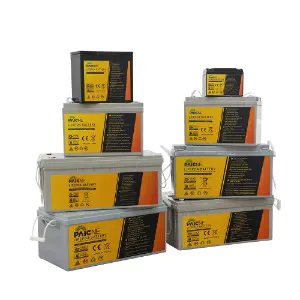
The use cases are not limited to one industry. You will see 48V systems in several directions:
In these applications, a 48 Volt Lithium Battery is often selected because the system design stays relatively straightforward while still supporting continuous operation.
From a factory point of view, producing 48V packs is not just about assembling cells in series. Cell matching, internal resistance control, and battery management systems all need to stay aligned.
A 48 Volt Lithium Battery Factory usually works with standardized module structures so that different applications can be supported without redesigning everything from scratch.
Even within the same voltage level, small differences in configuration can affect how the pack behaves under load. That is why testing and grading of cells often becomes part of the production routine.
When comparing voltage systems, differences are not only technical but also practical.
Lower voltage systems like 12V are easier to set up but tend to require higher current for the same output. That can affect cable size and energy loss.
Higher voltage systems such as 60V or 72V reduce current demand but introduce more requirements on safety layout and insulation.
The 48 Volt Lithium Battery sits between these two approaches. It is often used when designers want a system that does not lean too far in either direction.
In many real installations, 48V is not chosen because it is powerful or the simplest. It is chosen because it fits into existing system designs without major changes.
That is also why a 48 Volt Lithium Battery Factory often serves multiple sectors at the same time. The same voltage platform can be adapted for mobility products, backup systems, and light industrial equipment without changing the base structure too much.
The position of 48V in the market is less about a single advantage and more about how often it matches real usage conditions.
Get to know quickly
We are a professional lithium iron phosphate battery, solar energy storage system, industrial and commercial energy storage system manufacturer.
 +86-133 3592 3377
 +86-4008833583
 Email: [email protected]

Copyright © Zhejiang Paichen Energy Storage Group Co., Ltd All Rights Reserved.

Battery Energy System Manufacturer