 English
 中文简体
中文简体Industry News
Home / News / Industry News / How Do Residential and Commercial Solar Battery Storage Systems Differ?

Solar storage systems are used in both homes and business sites, but they rarely look or behave the same once installed. Even when the core battery technology is similar, the way a residential solar battery storage systems setup is applied tends to be quite different from a commercial one.
In many projects, the decision is not only about capacity. It is more about how electricity is used during the day and what kind of environment the system is placed in.
Energy demand is not at the same level
A home usually has a relatively steady electricity pattern. Lights, kitchen appliances, air conditioning, and small electronics make up many of the load. Because of this, a residential solar battery storage systems unit is often sized around daily household consumption rather than continuous heavy demand.
Commercial sites are different. A shop, office, or workshop can have sharp changes in power usage depending on working hours or equipment load. The same system that works for a house would normally be too small or too limited for that kind of variation.
System layout and how it is installed
Home storage systems are usually designed to stay compact. They are often placed in a garage corner, utility room, or sometimes mounted on a wall. The idea is to keep installation simple and space use low.
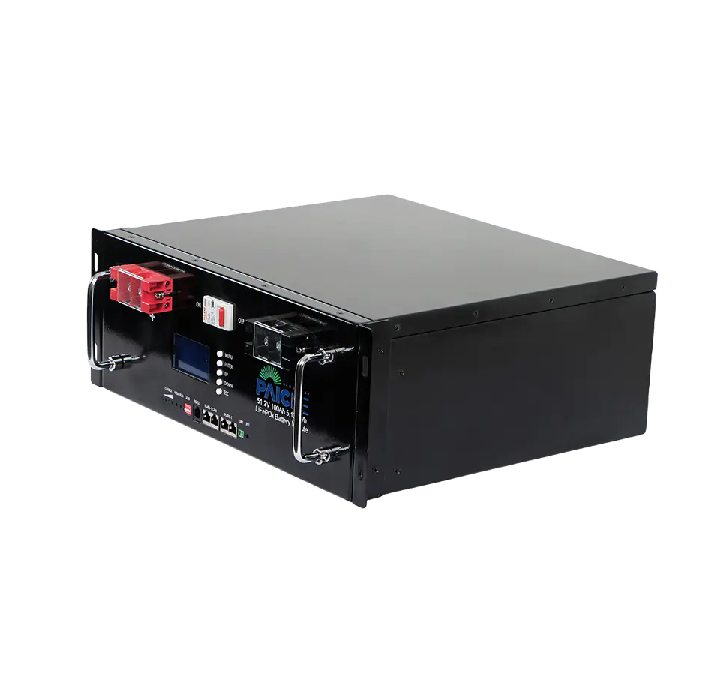
A residential solar battery storage systems product is often delivered as an integrated unit or a small set of modules that connect directly without complex setup.
Commercial systems are built in a more open way. Battery cabinets, inverters, and control units may be separated instead of combined. This makes it easier to expand capacity later or adjust the system when energy demand changes.
How they work during the day
In a home setting, the operation is usually predictable. Solar energy is stored during daytime and used in the evening when household activity increases. The cycle is fairly regular.
A residential solar battery storage systems setup often follows this daily rhythm without much variation.
In commercial environments, the pattern can change depending on business activity. Some systems are used to reduce electricity costs during peak hours, while others act as backup during unstable grid conditions. In some cases, charging and discharging can happen more than once in a single day.
Space and environmental conditions
Residential installations are usually limited by available space. That is why compact design becomes important. Equipment is placed close to living areas, so noise and size are often considered during selection.
A residential solar battery storage systems unit is generally designed to fit into these tighter conditions.
Commercial installations usually have more flexible space, but they also need more planning. Ventilation, safety distance, and access for maintenance become part of the layout. In some cases, systems are installed in separate equipment rooms or outdoor enclosures.
Monitoring and system control
Home systems are usually operated in a simple way. Users check battery status or energy usage through an app or basic display. The focus is on daily convenience.
A residential solar battery storage systems product normally does not require technical operation from the user side.
Commercial systems often include more detailed monitoring. Energy flow, load behavior, and system status may be tracked continuously, especially when multiple battery units are connected together. These systems are usually managed in a more centralized way.
Different reasons behind installation
Households usually install storage systems for energy stability and reducing reliance on the grid. The system is part of daily living rather than business operations.
Commercial users often look at cost control and operational stability. Energy storage can help manage electricity expenses or support equipment that cannot afford sudden power interruption.
Even when both use similar components, the purpose behind a residential solar battery storage systems setup is usually different from a commercial one.
How they overlap in real use
There are still many shared points. Both types rely on similar battery chemistry, inverter functions, and safety protection systems. The difference is more visible in structure and usage style than in basic technology.
In practice, the same core storage principle is adapted to two different environments. One is built around household routines, and the other is shaped by business operations.
That is why a residential solar battery storage systems unit and a commercial system may look related on paper but behave differently once they are in real operation.
Get to know quickly
We are a professional lithium iron phosphate battery, solar energy storage system, industrial and commercial energy storage system manufacturer.
 +86-133 3592 3377
 +86-4008833583
 Email: [email protected]

Copyright © Zhejiang Paichen Energy Storage Group Co., Ltd All Rights Reserved.

Battery Energy System Manufacturer