 English
 中文简体
中文简体Industry News

In recent years, the rapid adoption of residential, commercial, and containerized energy storage has brought safety discussions into a broader spotlight. For many buyers, the focus is no longer just capacity or price, but how reliably a system responds when something goes wrong. From a product and manufacturing perspective, a solar energy system factory is now expected to demonstrate not only assembly capability, but also a clear understanding of protection logic and risk control.
For any Solar Energy System Factory, safety is not a single feature but a layered structure. End users may only see a battery cabinet or inverter interface, yet behind that lies a combination of hardware protection, software strategy, and system-level redundancy.
Feedback from installers and distributors shows that safety incidents are rarely caused by a single failure. Instead, they often involve gaps between design assumptions and real-world usage. This is why a reliable solar energy system factory tends to focus on consistency in protection mechanisms rather than relying on isolated features.
Overcharge remains one of the widely critical risks in lithium-based storage systems. While widely systems claim to stop charging at a defined voltage, the actual implementation can vary significantly between manufacturers.
A typical solar energy system factory approach includes three layers:
However, differences emerge in component selection and calibration accuracy. Some systems use lower-precision voltage sensing, which may result in delayed responses. From a manufacturing standpoint, a solar energy system factory that emphasizes tighter voltage tolerance and component consistency tends to deliver more stable performance.
Overdischarge is often misunderstood as simply “battery empty.” In practice, it has longer-term effects on battery health and system usability.
A well-designed solar energy system factory solution ensures:
In contrast, systems with higher standby consumption may continue draining the battery even after shutdown. Over time, this can result in irreversible damage. This is why many buyers are starting to evaluate how a solar energy system factory handles post-shutdown behavior, not just the cutoff point itself.
Short circuit scenarios require immediate response. The difference between milliseconds and slower reactions can determine whether damage is contained.
Many solar energy system factory designs rely on a combination of:
The coordination between these elements is critical. Active protection reacts quickly, while passive components provide a fallback. A balanced design from a solar energy system factory typically integrates both, ensuring that even if one layer fails, another remains effective.
Not all systems on the market follow the same design philosophy. Buyers often encounter variations in protection depth, testing standards, and component quality.
The table below highlights some common differences:
|
Aspect |
Basic Systems |
Advanced Systems |
|
Voltage Sampling |
Moderate precision |
High precision (tight tolerance) |
|
Overcharge Protection |
Single-layer cutoff |
Multi-layer with redundancy |
|
Overdischarge Handling |
Shutdown only |
Controlled recovery + low standby drain |
|
Short Circuit Protection |
Passive or delayed active response |
Coordinated active + passive protection |
|
Fault Recovery Logic |
Automatic restart |
Controlled restart after inspection |
A solar energy system factory that invests in detailed testing and validation usually performs closer to the advanced category. This difference may not be obvious at a short glance, but becomes relevant over long-term operation.
Conversations with distributors and system integrators suggest that buyers are becoming more detail-oriented. Instead of focusing only on specifications, they are asking practical questions:
These questions reflect a shift in expectations. A solar energy system factory is no longer evaluated only by output capacity, but by how transparently it addresses these concerns.
Testing has become an important reference point for buyers comparing different options. A responsible solar energy system factory usually conducts validation under various scenarios, including overcharge, overdischarge, and short circuit conditions.
More importantly, test data should include:
This level of detail helps bridge the gap between technical design and real-world application.
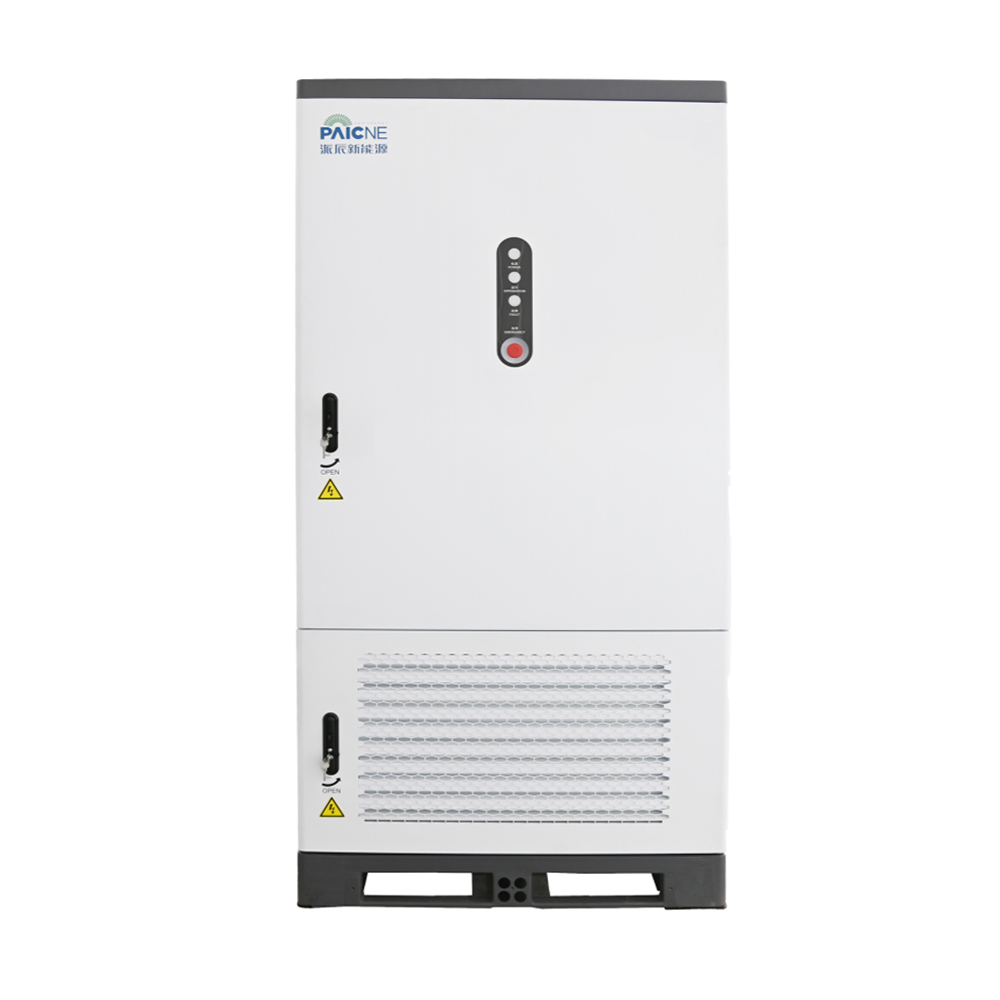
Energy storage safety is shaped by many small design decisions rather than a single defining feature. For a Solar Energy System Factory, consistency in protection strategy, component selection, and system behavior plays a significant role in overall reliability.
From a buyer's perspective, understanding how these protection mechanisms work in practice can make a noticeable difference in long-term performance. When evaluating different options, it may be useful to look beyond general claims and focus on how each solar energy system factory approaches real operating conditions.
Get to know quickly
We are a professional lithium iron phosphate battery, solar energy storage system, industrial and commercial energy storage system manufacturer.
 +86-133 3592 3377
 +86-4008833583
 Email: [email protected]

Copyright © Zhejiang Paichen Energy Storage Group Co., Ltd All Rights Reserved.

Battery Energy System Manufacturer