 English
 中文简体
中文简体Industry News

In recent years, discussions around battery technologies have become more detailed, especially as applications expand across consumer electronics, energy storage, and industrial equipment. Among the commonly used terms, Lithium Ion Battery and lithium battery are often used interchangeably, which can create confusion for buyers and distributors.
From a production and application perspective, these two categories are related but not identical. Understanding the differences helps buyers choose products that align with performance expectations, usage conditions, and cost considerations.
At a basic level, the term lithium battery refers to a broader category, while Lithium Ion Battery describes a specific rechargeable type within that category.
This distinction affects not only how the batteries are used, but also how they are designed and manufactured.
To make the difference clearer, the following table highlights several important aspects:
|
Feature |
Lithium Battery |
Lithium Ion Battery |
|
Rechargeability |
Non-rechargeable |
Rechargeable |
|
Anode Material |
Metallic lithium |
Graphite or similar materials |
|
Cycle Life |
Single use |
Hundreds to thousands of cycles |
|
Energy Density |
Relatively high |
High and stable over cycles |
|
Typical Applications |
Sensors, backup devices |
Phones, laptops, energy storage |
|
Maintenance |
No charging required |
Requires charging management |
As shown above, a Lithium Ion Battery is designed for repeated use, while traditional lithium batteries are often chosen for long shelf life and stable one-time discharge.
Different application environments drive the demand for each battery type.
Lithium batteries are commonly used in:
On the other hand, Lithium Ion Battery solutions are widely adopted in:
Because a Lithium Ion Battery can be recharged multiple times, it is more suitable for devices that require frequent and stable power supply over time.
When evaluating battery options, buyers often compare performance factors beyond basic specifications.
A Lithium Ion Battery typically offers:
Meanwhile, lithium batteries may provide:
In many scenarios, the choice between a lithium battery and a Lithium Ion Battery depends on whether the device is designed for continuous use or occasional operation.
Safety is another area where differences appear.
A Lithium Ion Battery usually includes protective components such as battery management systems (BMS) to regulate charging and discharging. These systems help manage temperature, voltage, and current.
Lithium batteries, while structurally simpler, rely on stable chemical composition and controlled discharge rates. Since they are not designed for recharging, their usage conditions are more straightforward.
Both types require proper handling and storage, but the internal design of a Lithium Ion Battery makes it more adaptable to complex electronic systems.
The battery industry continues to evolve with changing demand patterns. The growing use of renewable energy and portable electronics has increased the demand for Lithium Ion Battery technologies, especially in applications where repeated charging is essential.
At the same time, lithium batteries maintain a steady presence in niche applications where long shelf life and reliability are required without maintenance.
Manufacturers today often develop both product lines to meet varied market needs. This balanced approach allows buyers to select solutions based on actual usage rather than trends alone.
Selecting between a lithium battery and a Lithium Ion Battery depends on several practical factors:
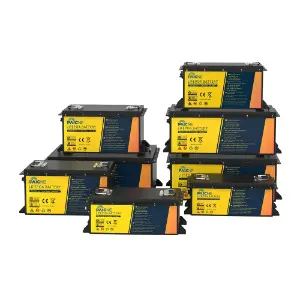
For devices used daily or requiring consistent performance, a Lithium Ion Battery is often a suitable option. For low-drain or standby applications, lithium batteries remain a practical choice.
Rather than replacing one another, these two types serve different roles across industries. As technology continues to develop, both lithium battery and Lithium Ion Battery solutions are likely to remain important in meeting diverse energy needs.
Get to know quickly
We are a professional lithium iron phosphate battery, solar energy storage system, industrial and commercial energy storage system manufacturer.
 +86-133 3592 3377
 +86-4008833583
 Email: [email protected]

Copyright © Zhejiang Paichen Energy Storage Group Co., Ltd All Rights Reserved.

Battery Energy System Manufacturer