 English
 中文简体
中文简体Industry News

A Lithium Ion Battery is widely used in portable electronics, electric vehicles, and energy storage systems due to its high energy density and long cycle life. One of the critical factors influencing performance is the charge and discharge rate, often expressed in terms of “C-rate.” The C-rate indicates how quickly a battery is charged or discharged relative to its nominal capacity. Understanding how different rates affect battery performance is essential for efficient and safe usage.
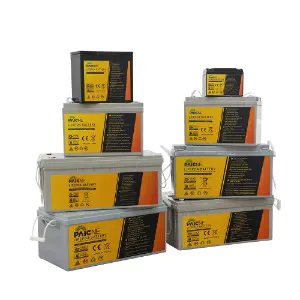
When a lithium-ion battery is discharged at a high C-rate, it provides a large current over a short period. This rapid discharge can cause a voltage drop due to internal resistance and may generate significant heat inside the cell. High discharge rates increase the likelihood of over-temperature conditions, potentially accelerating degradation of the electrolyte and electrodes. Consequently, the effective capacity of the battery may appear lower under high-rate discharge, even if the total energy stored remains the same at slower rates.
At low discharge rates, the battery releases energy slowly, allowing the cell voltage to remain relatively stable. Heat generation is minimal, and internal resistance has less effect on performance. Under these conditions, lithium-ion batteries can deliver close to their nominal capacity, and degradation due to thermal stress is minimal. Low discharge rates are preferable for applications requiring long, sustained energy output, such as backup power systems.
Charging at high C-rates is often used to reduce downtime, but can negatively affect battery performance if not carefully managed. Rapid charging generates heat and may promote lithium plating on the anode surface, which reduces capacity and increases the risk of internal short circuits. High-rate charging may also slightly reduce cycle life, especially in cells not specifically designed for fast charging. Battery management systems (BMS) are crucial to monitor temperature and voltage during fast charging to prevent damage.
Charging at low rates allows lithium ions to intercalate smoothly into the anode material without stress. This results in higher energy efficiency, lower heat generation, and extended cycle life. Low-rate charging is ideal for improving battery longevity, although it requires more time to reach full capacity. For devices or applications that prioritize durability over rapid energy replenishment, slow charging is generally recommended.
The key to optimizing lithium-ion battery performance is balancing charge and discharge rates with operational requirements. High rates can provide immediate power needs but may compromise capacity and lifespan if sustained repeatedly. Low rates are gentler on the battery, preserving energy capacity and cycle life, but may not meet high-power demands. Choosing the appropriate C-rate and integrating thermal management and monitoring systems ensures safe and efficient battery operation.
Lithium-ion battery performance varies significantly with different charge and discharge rates. High rates can reduce effective capacity and accelerate degradation due to heat and internal resistance, while low rates maintain voltage stability and prolong cycle life. Understanding these effects is essential for designing safe, efficient, and long-lasting energy storage systems. Proper management of C-rates, temperature, and charging protocols allows users to optimize performance according to their specific application needs.
Get to know quickly
We are a professional lithium iron phosphate battery, solar energy storage system, industrial and commercial energy storage system manufacturer.
 +86-133 3592 3377
 +86-4008833583
 Email: [email protected]

Copyright © Zhejiang Paichen Energy Storage Group Co., Ltd All Rights Reserved.

Battery Energy System Manufacturer