 English
 中文简体
中文简体Industry News

Sourcing teams evaluating a 48 Volt Lithium Battery Manufacturer often start with cycle-life and capacity figures on a spec sheet, then discover during qualification that the numbers that matter for their specific application aren't listed there at all.
Cycle-life ratings from a 48 Volt Lithium Battery Manufacturer typically come from standardized lab testing, which may not reflect how the battery behaves under a buyer's actual charge pattern. A unit charged and discharged in shallow, frequent cycles — common in solar retrofit and backup power applications — ages differently than one tested against deep full-cycle discharges in a lab setting. Buyers should ask directly whether cycle-life figures were generated under conditions resembling their intended use, and request the underlying test protocol rather than accepting a single number without context.
A 48 Volt Lithium Battery Manufacturer that designs its own battery management system can tune charge-balancing and thermal-protection behavior specifically for the cell chemistry it uses, while a manufacturer relying on a third-party BMS is limited to whatever configuration that vendor supports. This distinction matters for buyers who need firmware customization — a fixed discharge cutoff, a specific communication protocol for integration with existing inverters, or region-specific safety thresholds — since in-house BMS design generally allows faster turnaround on these requests than a third-party arrangement.
|
Vetting Question |
Signal to Look For |
|
Cycle-life testing basis |
Test protocol matches your actual charge/discharge pattern |
|
BMS ownership |
Designed in-house vs. sourced from third party |
|
Certification scope |
Documentation specific to your import market |
|
Production scale |
Consistent QC data across a stated annual output |
A lithium iron phosphate battery supplier exporting to multiple regions should hold certification documentation specific to each destination market rather than a single general compliance statement. Buyers importing into the EU, the Middle East, or Southeast Asia face different regulatory requirements, and a certificate valid in one region does not automatically satisfy another. Requesting the specific certificate set for the destination country — rather than a broad claim of "international standards compliance" — avoids import delays discovered only after a shipment has already left the factory.
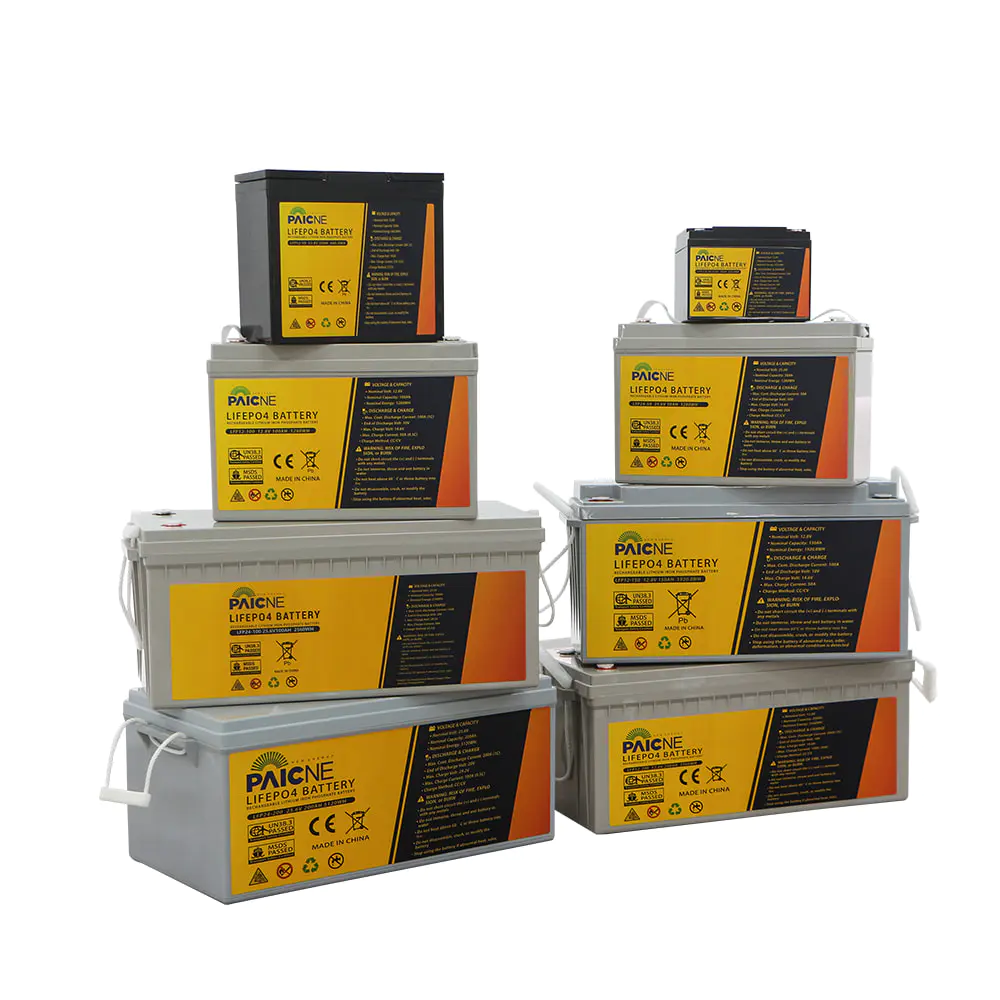
A 48 Volt Lithium Battery Manufacturer producing at high annual volume faces different quality-control challenges than a smaller operation, since defect patterns that are statistically less common at low volume become more visible across a larger production run. Buyers should ask what inspection checkpoints exist specifically for high-volume production — connector fit, cable routing, and enclosure seal consistency, for example — rather than assuming that cell-level testing alone covers these higher-volume failure modes.
Requests for custom BMS design — adjusted voltage cutoffs, communication protocols, or thermal thresholds — are common in wall-mounted battery pack sourcing, and a manufacturer with flexible in-house firmware development can typically accommodate these without redesigning the physical cell architecture. Buyers should clarify during vetting whether a requested BMS change requires new tooling or only a firmware revision, since the two paths carry very different reduce times and cost implications for a project timeline.
Get to know quickly
We are a professional lithium iron phosphate battery, solar energy storage system, industrial and commercial energy storage system manufacturer.
 +86-133 3592 3377
 +86-4008833583
 Email: [email protected]

Copyright © Zhejiang Paichen Energy Storage Group Co., Ltd All Rights Reserved.

Battery Energy System Manufacturer