 English
 中文简体
中文简体Industry News
Home / News / Industry News / Lithium Ferro Phosphate Battery Pack Design Supports Modular Energy Storage

Energy storage projects are placing greater attention on how battery modules are configured, monitored, and expanded rather than looking only at nominal capacity. A Lithium Ferro Phosphate Battery Pack is one part of this development, with its performance depending on cell arrangement, battery management, communication, thermal conditions, and the way individual modules are integrated into a larger energy storage system. This makes pack-level engineering increasingly important for applications ranging from household backup power to larger storage installations.
A battery pack is more than a collection of cells connected together. The cells need to operate within appropriate voltage, current, and temperature ranges, while the pack must provide a practical interface with the equipment using the stored energy.
For a Lithium Ferro Phosphate Battery Pack, this means the battery management system becomes an important part of the overall architecture. Paichen's lithium iron phosphate products use intelligent BMS solutions for monitoring battery status and performance parameters, while some wall-mounted configurations include RS485 and CAN communication interfaces for connection with mainstream inverter systems.
This type of communication is increasingly relevant as battery storage becomes part of a connected energy system rather than a standalone power source.
One of the practical developments in battery storage is modular configuration. Instead of designing every installation around a fixed battery capacity, modular systems can allow the storage arrangement to be matched more closely with the required energy demand.
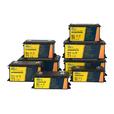
Paichen's wall-mounted lithium iron phosphate battery is described as using a compact modular structure that can support parallel connection of up to 32 battery modules.
For a Lithium Ferro Phosphate Battery Pack, modularity can influence both initial system design and future expansion. The battery capacity, available installation space, inverter compatibility, and required output all need to be considered when determining how many modules are appropriate.
Battery management is particularly important when multiple cells or modules operate as one system. Monitoring remaining capacity, charging and discharging conditions, and other operating parameters allows the system to manage the battery according to its operating requirements.
The BMS architecture also creates a connection between the battery and the wider energy system. Communication interfaces can allow battery information to be exchanged with an inverter or other control equipment. In Paichen's wall-mounted products, RS485 and CAN interfaces are provided for communication with mainstream inverter brands.
This illustrates why Lithium Ferro Phosphate Battery Pack development increasingly involves electrical communication and control in addition to cell assembly.
Battery pack design also changes according to where the system will be installed. Wall-mounted systems prioritize compact installation, while cabinet-type systems can accommodate larger module arrangements and different expansion requirements.
Paichen's cabinet-type lithium iron phosphate battery uses a 19-inch industrial control cabinet format and supports multi-level parallel expansion. This type of configuration shows how mechanical structure and electrical capacity can be developed together.
For B2B buyers, the choice between wall-mounted, cabinet, or other configurations therefore depends on more than battery chemistry. Installation area, capacity requirements, voltage, current, communication, and expansion plans all contribute to the final system architecture.
Lithium iron phosphate chemistry is widely used in energy storage, but the chemistry alone does not define the finished battery system. Cell configuration, BMS, enclosure design, communication, cooling, and installation method all influence how the battery operates within a larger energy system.
A Lithium Ferro Phosphate Battery Pack therefore represents an important transition from individual battery cells to application-oriented energy storage equipment. As storage projects become more modular, pack manufacturers need to consider not only energy capacity but also how the battery communicates, expands, fits into available space, and connects with other electrical equipment.
The development of modular lithium iron phosphate batteries suggests that future battery procurement will increasingly involve evaluating the complete pack architecture rather than comparing cells or capacity figures in isolation. For system developers and B2B buyers, this makes pack-level compatibility and configuration important parts of the energy storage design process.
Get to know quickly
We are a professional lithium iron phosphate battery, solar energy storage system, industrial and commercial energy storage system manufacturer.
 +86-133 3592 3377
 +86-4008833583
 Email: [email protected]

Copyright © Zhejiang Paichen Energy Storage Group Co., Ltd All Rights Reserved.

Battery Energy System Manufacturer