 English
 中文简体
中文简体Industry News

Cycle life is one of the critical indicators of a battery’s long-term value. It measures how many full charge-discharge cycles a battery can complete before its capacity drops below a usable threshold, typically around 80% of the original capacity. A longer cycle life means the battery can operate efficiently for many years, reducing replacement costs and ensuring stable performance. Wall-mounted battery systems, especially those from a reliable Wall Mounted Battery Factory, are designed to offer thousands of cycles, making them suitable for daily home energy storage and peak-shaving applications.
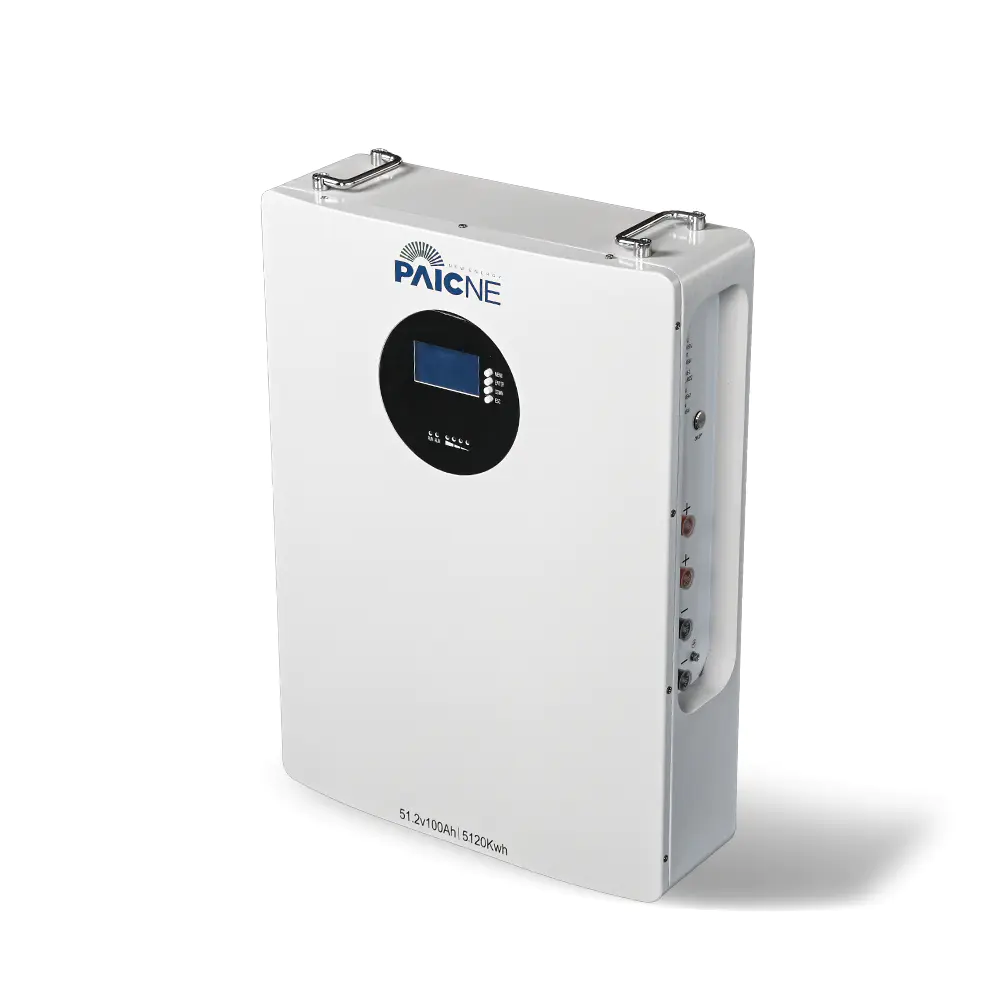
Energy density refers to the amount of energy a battery can store relative to its weight or volume. Higher energy density enables a more compact design while delivering sufficient power for household or commercial applications. For wall-mounted batteries, this is particularly important because space efficiency is often a key selling point. A battery with high energy density can provide longer backup periods or store more solar-generated energy without occupying excessive wall space. When assessing energy density, pay attention to both gravimetric energy density (energy per kilogram) and volumetric energy density (energy per liter). These parameters help determine whether a battery can meet your household energy needs while fitting seamlessly into the intended installation area.
Several technical parameters collectively determine a wall-mounted battery’s quality. Voltage and nominal capacity indicate how much power the battery can deliver and store. Continuous and peak discharge rates reveal whether the battery can handle high-demand appliances or sudden power surges. Efficiency, often expressed as round-trip efficiency, measures how much energy is lost during charging and discharging; higher efficiency means more of the stored energy is actually usable. Safety certifications, thermal management systems, and built-in battery management systems (BMS) are equally important, ensuring the battery operates reliably without overheating or overcharging. A reputable Wall Mounted Battery Factory often provides detailed specifications, helping consumers compare performance metrics objectively and make informed choices.
While higher cycle life and energy density are desirable, they often come with higher costs. Consumers need to balance upfront investment with long-term benefits. For instance, a battery with slightly lower energy density but significantly longer cycle life may be more economical over ten years. Additionally, evaluating warranties and manufacturer support is crucial, as these reflect confidence in product reliability and durability. Some wall-mounted battery suppliers also offer modular designs, allowing users to scale capacity over time, which can be more cost-effective than purchasing a single high-capacity unit upfront.
A well-chosen wall-mounted battery not only performs well technically but also integrates smoothly into the household energy system. Consider whether the battery can store energy from solar panels efficiently, respond to time-of-use electricity pricing, and interact with smart home energy management platforms. Technical specifications like cycle life and energy density directly influence how effectively the battery can shift energy usage, provide backup power, and reduce electricity costs. In many cases, a Wall Mounted Battery Factory can guide system sizing, installation practices, and maintenance routines, ensuring suitable performance throughout the battery’s lifespan.
Get to know quickly
We are a professional lithium iron phosphate battery, solar energy storage system, industrial and commercial energy storage system manufacturer.
 +86-133 3592 3377
 +86-4008833583
 Email: [email protected]

Copyright © Zhejiang Paichen Energy Storage Group Co., Ltd All Rights Reserved.

Battery Energy System Manufacturer