 English
 中文简体
中文简体Industry News

Residential solar adoption curves and residential storage adoption curves no longer move together in markets — installers report that storage attachment now trails well behind panel installation in mature solar markets, and closes that gap only when grid reliability becomes a visible household concern rather than a hypothetical one.
Homeowners who installed solar without battery storage for residential solar in past years are increasingly retrofitting storage after experiencing outages, rather than adding it during the original installation. This retrofit pattern changes what distributors need to stock: wall-mounted units that install onto an existing solar array without requiring a full system redesign are now moving faster than bundled solar-plus-storage kits sold as a single package.
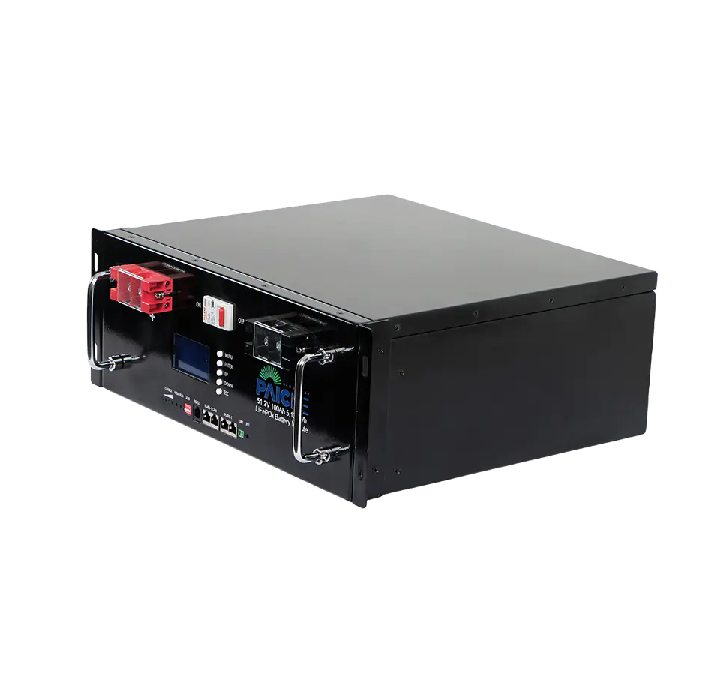
A 48V battery pack is the dominant voltage class for residential retrofit because existing inverters on installed solar systems are already configured around that range, and swapping an inverter to accommodate a different storage voltage adds cost that undermines the retrofit case entirely. Distributors sourcing battery storage for residential solar for the retrofit segment specifically should confirm inverter compatibility ranges before locking in a voltage class, since a mismatch here is the common cause of installation delays reported by field technicians.
|
Configuration |
Wall-Mounted Unit |
Stacked High-Voltage Unit |
|
Typical use case |
Retrofit onto existing solar |
New-build, higher-capacity systems |
|
Installation footprint |
Small, single-wall mount |
Larger, floor-standing or multi-module |
|
Voltage class |
48V standard |
Higher-voltage stacked configuration |
|
Best fit for |
Single-family retrofit market |
New residential or small commercial builds |
The feature that actually drives repeat purchases in this category is not capacity on the spec sheet but how the battery management system handles partial charge cycles during grid instability — a BMS-managed storage system that cycles cleanly through frequent partial discharges holds capacity longer than one rated for the same cycle count under lab conditions but tested only against full charge-discharge cycles. Buyers evaluating battery storage for residential solar against real-world grid conditions should ask suppliers whether cycle-life figures come from full-depth testing or partial-cycle testing, since the two numbers are not comparable and partial-cycle behavior is what actually determines field performance during rolling outages.
Requests for enclosure color, cable entry position, and wall-bracket orientation account for customization tickets in this category, more than requests to change internal cell chemistry or capacity. A home energy storage manufacturer with in-house PACK design can typically accommodate these mounting and enclosure variations without new tooling, while capacity or chemistry changes still require a longer development cycle regardless of how the enclosure is configured. Buyers should separate these two categories of customization requests when quoting reduce times, since bundling them into a single quote often overstates turnaround for enclosure-only changes.
A unit certified for the EU market carries different documentation than the same physical unit destined for the Middle East or Southeast Asia, even when the underlying cell chemistry and BMS design are identical across all three. Manufacturers exporting battery storage for residential solar across multiple regions typically maintain separate certification files per destination rather than a single blanket certificate, and buyers should request the specific certification set matching their import market rather than accepting a general compliance statement that may not cover the destination's actual requirements.
Get to know quickly
We are a professional lithium iron phosphate battery, solar energy storage system, industrial and commercial energy storage system manufacturer.
 +86-133 3592 3377
 +86-4008833583
 Email: [email protected]

Copyright © Zhejiang Paichen Energy Storage Group Co., Ltd All Rights Reserved.

Battery Energy System Manufacturer