 English
 中文简体
中文简体Industry News

Electricity use in a commercial building does not stay constant throughout the day. Office buildings, hotels, shopping centers, factories, and charging facilities can all experience periods when power demand rises sharply and other periods when available electricity is underused. Business Energy Storage provides a way to move stored electrical energy between these different operating periods, making the storage system part of the site's wider power management rather than a standalone battery cabinet.
One reason Business Energy Storage has become relevant to commercial and industrial facilities is the difference between when electricity is consumed and when it is readily available. A storage system can charge during one period and discharge during another, giving the facility another way to manage its electrical load.
Paichen's industrial and commercial energy storage range includes all-in-one systems combining batteries, inverters, and control systems. The listed configurations include 100kW 200kWh air-cooled equipment, 100kW 215kWh liquid-cooled equipment, and 100kW 233kWh liquid-cooled equipment.
The same equipment can also have a role when normal grid power is interrupted. Emergency backup is listed by Paichen as one application of its industrial and commercial storage systems, alongside power regulation and peak-valley electricity price management.
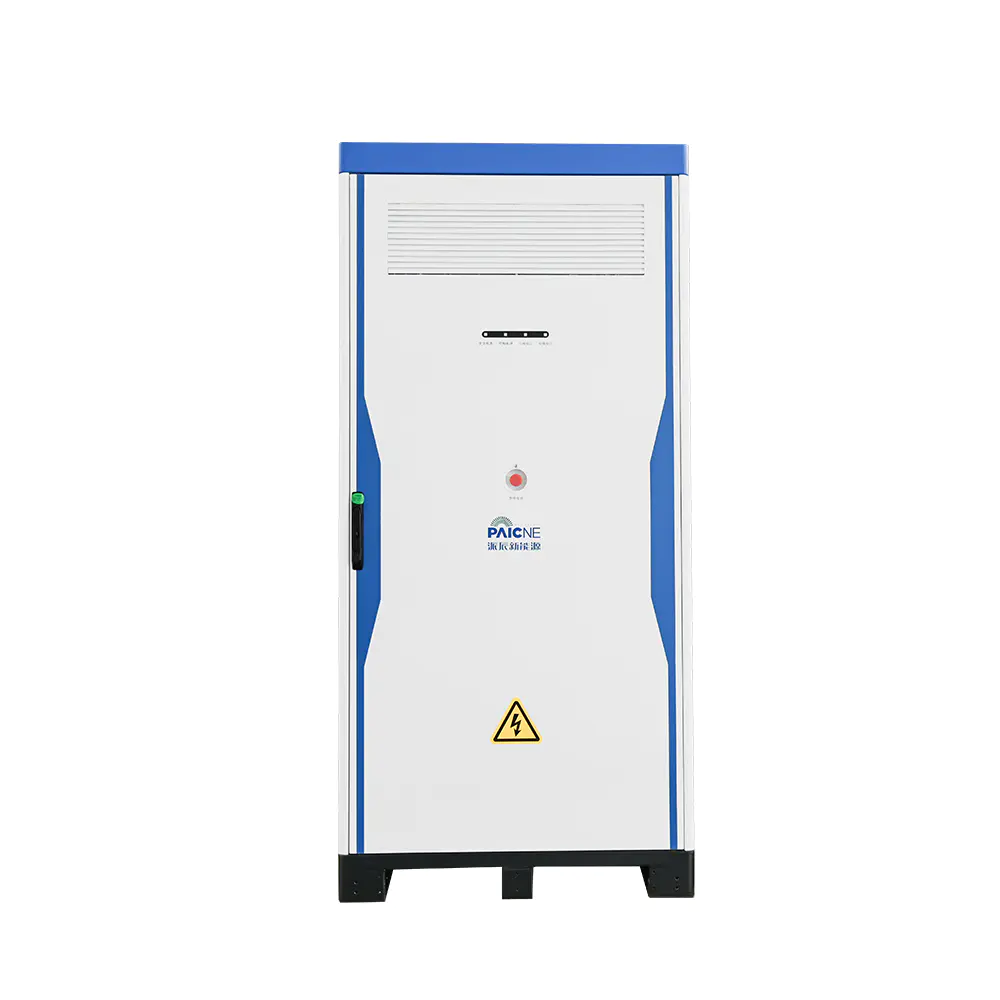
Not every commercial facility has the same electrical profile, so Business Energy Storage is not limited to one fixed equipment format. A smaller industrial or commercial site may use an all-in-one unit, while a larger installation can require a containerized storage system with substantially greater capacity.
Paichen's product range reflects this difference. Its page lists containerized systems including a 3727.36kWh liquid-cooled system and a 6.67MWh air-cooled system, alongside the smaller all-in-one units.
The physical configuration therefore follows the required storage scale. An all-in-one cabinet can combine several functions in a relatively compact structure, while containerized equipment provides a larger platform for higher-capacity applications.
Another role for Business Energy Storage appears when commercial or industrial facilities generate electricity from renewable sources. Solar and wind generation do not necessarily match the exact time when electricity is consumed. Storage provides an intermediate point between generation and demand.
Paichen identifies microgrid applications as one area where industrial and commercial storage can be combined with solar or wind generation. In such a system, the battery is not simply providing backup power. It becomes part of the energy flow between generation equipment, local loads, and the wider electrical network.
This changes the way the storage system is operated. Charging and discharging can depend on generation output, facility demand, grid conditions, and the required reserve capacity.
Electric vehicle charging stations are another application listed for Business Energy Storage. A charging site can place a concentrated demand on the electrical supply when several vehicles charge at the same time.
An energy storage system can operate alongside charging equipment as part of the site's power infrastructure. Instead of treating the charging station and storage system as unrelated equipment, they can be coordinated through the site's electrical management system.
The same principle applies to other commercial facilities where electrical loads change significantly during operating hours. Storage becomes another controllable element within the site's power architecture.
For a Business Energy Storage system, the battery is only one part of the finished equipment. Battery management, PACK design, inverters, electrical protection, control systems, and thermal management all affect how the complete unit operates.
Paichen states that its manufacturing and R&D capabilities cover lithium iron phosphate batteries, ternary lithium batteries, lead-acid gel batteries, and new energy storage systems. The company also describes capabilities covering BMS, PACK design, and electrical system design, with its own testing laboratory and inspection equipment.
This broader manufacturing scope is particularly relevant for integrated storage equipment because the individual components need to operate as one system. Paichen also states that its R&D team can develop and produce products according to customer drawings or samples.
The development of Business Energy Storage is therefore closely tied to the electrical environment in which the system will operate. Peak demand management, emergency backup, renewable energy integration, microgrids, and EV charging can all require different operating strategies, while the underlying equipment may range from an all-in-one cabinet to a multi-megawatt containerized system.
Paichen's current industrial and commercial range reflects this progression from compact integrated units to larger energy storage platforms. Rather than treating commercial storage as one fixed product category, the equipment can be configured around the capacity, power requirements, and operating conditions of the site.
Get to know quickly
We are a professional lithium iron phosphate battery, solar energy storage system, industrial and commercial energy storage system manufacturer.
 +86-133 3592 3377
 +86-4008833583
 Email: [email protected]

Copyright © Zhejiang Paichen Energy Storage Group Co., Ltd All Rights Reserved.

Battery Energy System Manufacturer